
How Air-Pressure Drain Blasters Work — and Which Drains They Suit

An air-pressure drain blaster clears a blockage with one burst of compressed air. The air pushes against the water that stands in the drain, and the water carries that force along the pipe to the blockage. It works best on soft blockages close to the sink, toilet or shower: hair, soap, grease and paper. It is the wrong tool for tree roots, solid objects or a blocked main sewer.
How a drain blaster works
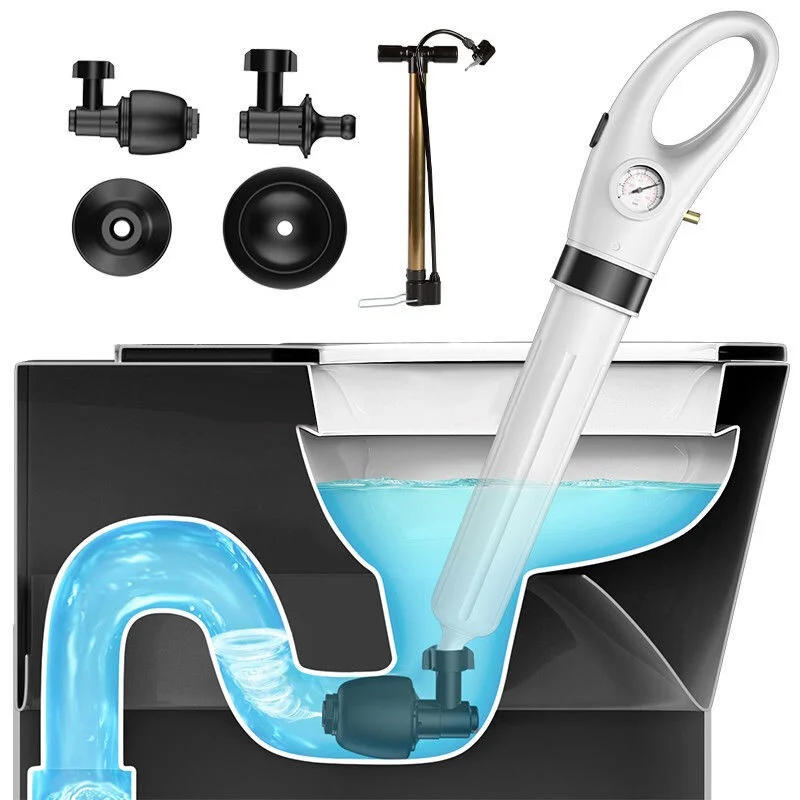
The tool stores air under pressure, then releases it in one burst into a sealed drain. The rubber cups, the pressure gauge and the battery all serve one purpose: to make that burst stronger or easier to control.
- Fill the barrel with air. On a manual model you pump by hand, much like a bicycle pump. On an electric or cordless model, a small motor does the pumping. More strokes, or a longer fill, store more pressure.
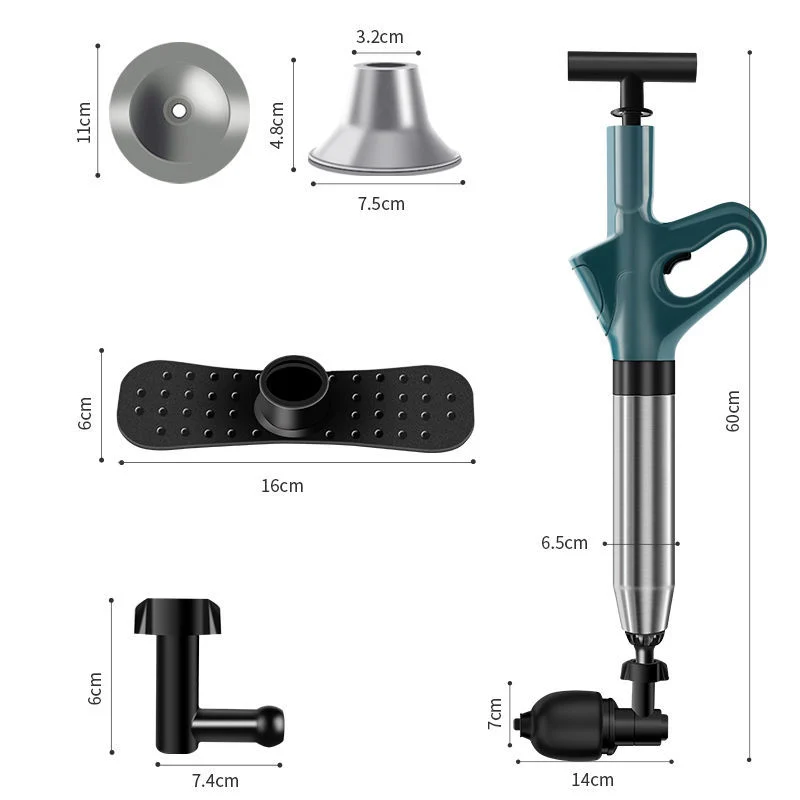
- Seal the drain. Press a rubber cup or adapter firmly onto the drain opening, and cover any overflow hole or second outlet. If air can escape, the burst is lost.
- Release the air. Pull the trigger to open the valve. The air hits the water in the trap.
- Let the water do the work. Water hardly compresses, so the push travels through it to the blockage and moves it. This is why the drain needs standing water. In a dry pipe or an empty toilet bowl, the air simply escapes upwards.
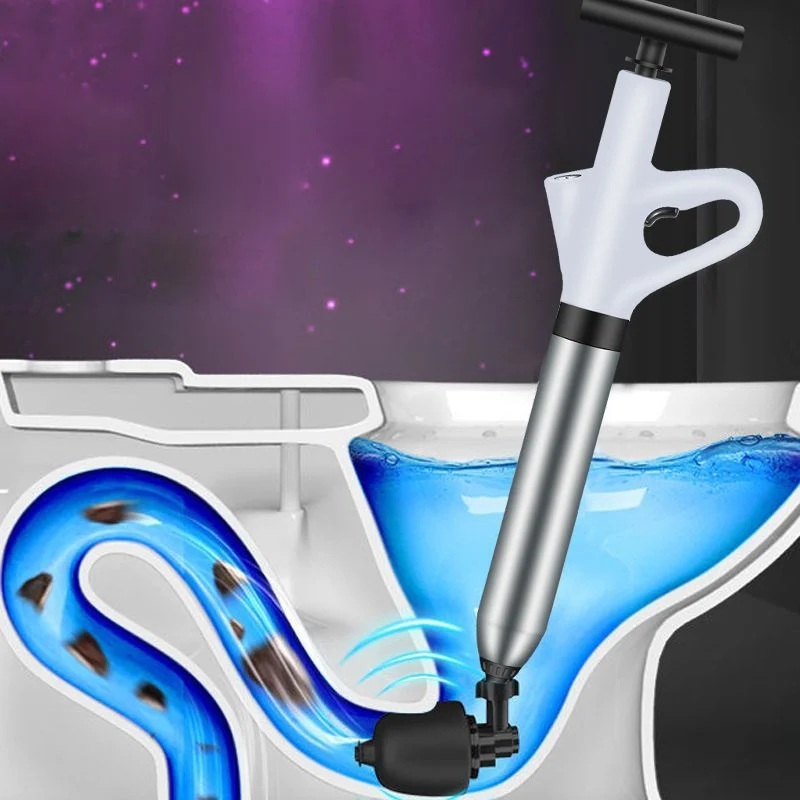

A plunger works on the same principle, but the user creates the pressure by hand, one push at a time. A drain blaster gives one stronger burst, with less splashing than repeated plunging.
What it clears, and what it doesn’t
Think of a drain blaster as the first tool to try on a household fixture. It does not replace a drain snake, a high-pressure water jetter or a plumber when the problem is deep in the system.
| Situation | Use a drain blaster? | Why |
|---|---|---|
| Toilet blocked with paper or waste | Yes | Use the large cup and keep the bowl at least half full of water |
| Bathroom basin with hair and soap | Yes | Cover the overflow hole with a wet cloth first |
| Kitchen sink with grease and food waste | Yes | On a double sink, seal the second drain, or the pressure escapes there |
| Bath or shower drain | Yes | Remove the plug or strainer and cover the overflow |
| Floor drain | Yes | Use the flat sealing pad so the cup sits level |
| Blockage in the main sewer or outside the building | No | The pressure fades long before it reaches that far |
| Tree roots, a toy, a phone, or a mass of wet wipes far down the pipe | No | Air cannot cut or lift a solid object, and may push it in tighter |
| Drain recently treated with chemical drain cleaner | No | The burst can splash corrosive liquid back out |
| Very old, cracked or corroded pipes, or loose joints | Ask a plumber first | A strong burst can open a weak joint |
Using it without damaging the pipes
There is no single safe pressure for every drain, because pipe age, material and layout differ from building to building. Follow the operating manual of each model, and take the condition of the pipes into account. These steps keep the risk low:
- Check the water level. There should be enough water to cover the cup. Add water if the bowl or basin is dry.
- Choose the attachment that fits the opening. A cup that rocks or hangs over the edge will leak air.
- Seal every other opening. Overflow holes, the second bowl of a double sink, a dishwasher hose connected to the sink: cover them with a wet cloth and hold it in place.
- Start with low pressure. Use a few pump strokes or a short fill for the first burst. Increase step by step, and only if nothing moves. A model with a built-in gauge makes this easier.
- Hold the tool upright and press down firmly before you pull the trigger, so the cup stays in place during the burst.
- Stop after three or four attempts. If the blockage has not cleared, it is probably too deep or too solid for air. Use a drain snake or call a plumber.
- Rinse and dry the cups after use, and store them flat so the rubber keeps its shape.
Wear gloves and eye protection. Never use the tool on a drain that still contains chemical drain cleaner.
Manual, electric or cordless: choosing models for your range
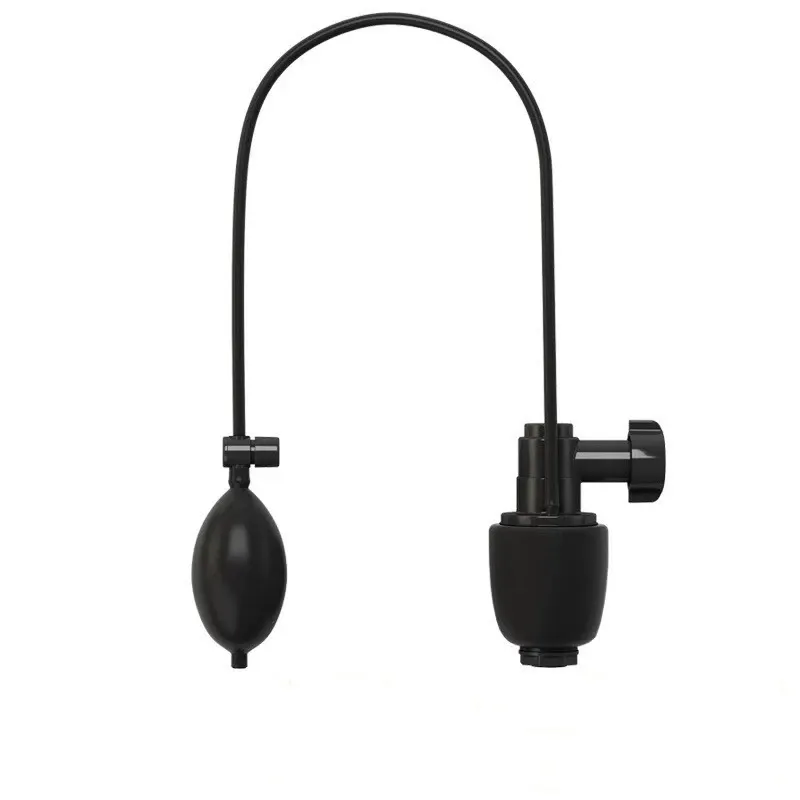
The power source changes the price, the carton size and the paperwork. It does not change how the tool works. Many retailers stock one manual model at the entry price and one rechargeable kit as the premium option.
| Model | Power | Main features | Individual pack | Units per carton | Typical sales channel |
|---|---|---|---|---|---|
| HX-028 | Manual pump | Stainless-steel barrel, interchangeable cups, no battery | 58 × 18 × 7.5 cm, 0.91 kg | 10 or 12 | Hardware and home-care shops |
| HX-011 | Manual, separate hand pump | White ABS body, loop handle | 52 × 15 × 9.5 cm, approx. 0.93 kg | 16 | Home-care shops |
| HX-001 | Cordless, removable lithium battery | Orange housing; battery data confirmed on the sample | 57 × 14 × 11 cm, 1.25 kg | 12 | Hardware shops |
| HX-001 with case | Cordless, removable lithium battery | Same tool, with carry case and accessories | 61.5 × 27 × 10 cm, 2.8 kg | 7 | Tool shops, building maintenance |
| LD-001 | Cordless, removable battery | 10.8 V / 1,850 mAh battery, motor up to 87 W, 12.6 V / 1 A charger | 53 × 26.5 × 11 cm, 3.2 kg | 5 or 6 | Tool shops, building maintenance |
| LD-002 | Cordless, removable large battery | Battery data confirmed on the sample | 52 × 26.5 × 14 cm, 3.3 kg | 5 | Tool distributors, DIY stores |
| LD-003 | Cordless, built-in battery | Compact case | 49 × 22 × 9 cm, 2.0 kg | 9 | Online shops; outside the EU from February 2027 (see below) |

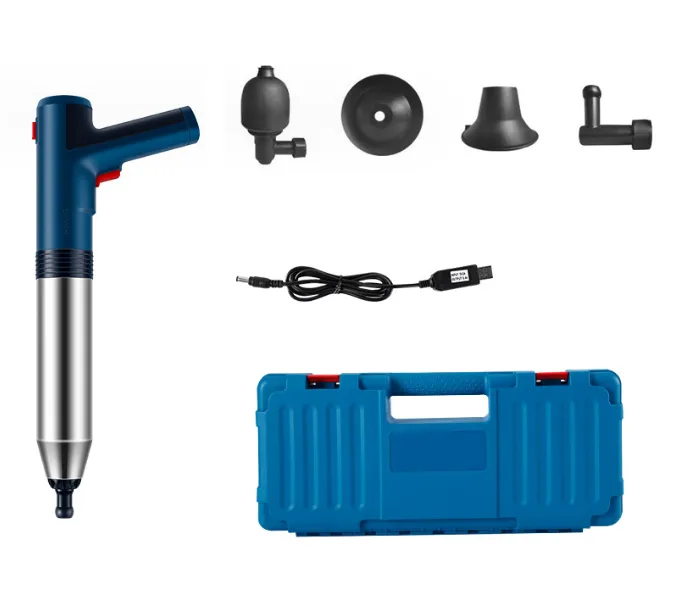
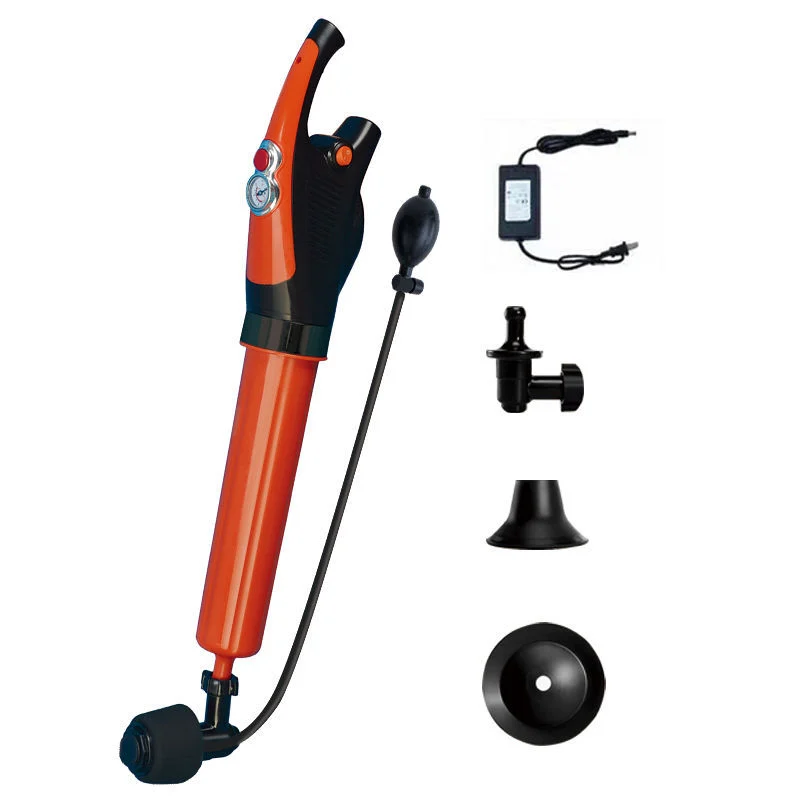

Carton data for planning a mixed container or a first trial order:
| Model | Units per carton | Carton size | Carton weight | Volume per carton |
|---|---|---|---|---|
| HX-028 | 12 | 59 × 32 × 55 cm | 12 kg | 0.104 m³ |
| HX-028 | 10 | 59 × 37 × 39 cm | 10 kg | 0.085 m³ |
| HX-011 | 16 | 54 × 32 × 77 cm | 17 kg | 0.133 m³ |
| LD-001 | 6 | 55 × 28.5 × 68 cm | 20 kg | 0.107 m³ |
| LD-001 | 5 | 55 × 28.5 × 57 cm | 0.089 m³ |
Figures come from our 2026 catalogue. The final specification and packing follow the approved sample. The minimum order is usually 50–200 pieces per model and is confirmed in the quotation. Logo, colour and retail box can be customised.
Notes for buyers in Europe and Southeast Asia
Europe
- Documents. Electric and cordless models need CE and RoHS documents for the exact model. We match the documents to the model and configuration during quotation. Ask for them before you order, not after shipment.
- EU responsible person. Under the EU General Product Safety Regulation (GPSR), consumer products sold in the EU need a responsible economic operator based in the EU. Online listings must show its contact details and the safety information. In most cases, the importer takes this role.
- Manuals and warnings. Safety instructions must be in the language of the country where the product is sold. Plan the manual and box text for each country early, because changing printed packaging late costs time.
- Batteries from February 2027. Under the EU Batteries Regulation, from 18 February 2027 the end user must be able to remove and replace the battery in a portable appliance. LD-001, LD-002 and HX-001 have removable batteries. LD-003 has a built-in battery, so EU orders need a separate plan. Our guide to the EU battery rules for 2027 explains this in detail.
Southeast Asia
- Chargers and plugs. Plug types differ across the region. Malaysia and Singapore, for example, use the British three-pin plug. Tell us the destination country, and the charger will come with the right plug.
- Manual models are simple to ship. HX-028 and HX-011 have no battery or charger. There are no battery shipping rules to follow, and one product listing works in every country.
- Small first orders. With a minimum order of 50–200 pieces per model and the carton data above, a distributor can test one manual and one cordless model in a single mixed shipment.
FAQ
Is a drain blaster safe for PVC pipes?
In sound pipes with normal household blockages, it is widely used. Start with low pressure and make sure the cup seals well. The risk comes from old, cracked or badly glued joints, not from the plastic itself. If in doubt, start at the lowest setting and follow the manual.
Which works better, a drain blaster or a plunger?
Both push water against the blockage. A plunger needs repeated strokes by hand, while a drain blaster gives one stronger burst with less splashing. On a blocked toilet or a basin full of hair, a blaster often clears it in fewer attempts.
Why does nothing happen when I pull the trigger?
Usually, air is escaping: through an open overflow hole, a second sink drain, or a cup that does not sit flat. There may also be too little water above the drain.
Does it work without water in the drain?
Not well. The water carries the force to the blockage. Add enough water to cover the cup.
Can it clear a blocked main sewer?
No. The pressure fades over distance. A blocked main sewer needs a drain snake, a water jetter or a plumber.
Can I put my own brand on these tools?
Yes. Logo, colour and retail packaging can be customised on all the models above. The minimum order is usually 50–200 pieces per model and is confirmed in the quotation.
Build your drain-tool range with Wancomee
Send us the models you are interested in, your target quantity and the destination country. We will reply with a model-specific quotation, carton data, sample options and the documents that apply to your market.
Related guides
Sources
- Wancomee Drain Cleaning Product Guide 2026 and product catalogue (model and carton data)
- EU General Product Safety Regulation: summary by the U.S. International Trade Administration
- EU replaceable battery rules, Regulation (EU) 2023/1542 Article 11: Compliance Gate