
Cast Iron Woks, Hot Pots and Takoyaki Pans: Building an Asian Cookware Range

When sourcing cast iron woks, hot pots and snack pans, match the base shape, dimensions and handles to the customer’s cooker and intended dishes. Use the catalog to build a shortlist, then confirm the approved heat sources and sample for each selected reference.
This guide covers the Asian-style cast iron on our list: woks, hot pots, rice and stew pots, and snack pans. It explains what to choose for each market.
Woks: base shape comes first
Start with the buyer’s actual cooker, supported pan shape and handling requirements. The WC-CI522 range includes the flat-bottom WC-CI522F and round-bottom WC-CI522R. Confirm the approved heat sources and support arrangement for the chosen version before presenting it for a particular cooker.
| Model | Size | Depth | Weight (listed) | Handles | Notes |
|---|---|---|---|---|---|
| WC-CI522 | 36 cm | 11 cm | About 4.5 kg | Two wooden side handles | Flat or round base; wooden lid option; pack 41 × 41 × 16 cm |
| WC-CI601 | 20–38 cm, eight sizes | 7–12 cm | 1.5–4.9 kg | Two cast loop handles | Wooden lid listed separately as WC-CI700 |
| Double-handle wok | On request | Deep bowl | On request | Two wooden side grips | Sizes and finish confirmed per order |
Weights are supplier listings and are confirmed on the sample.


Handles and weight
The WC-CI522 catalog lists about 4.5 kg for its 36 cm wok. Review grip, lifting clearance and pack dimensions on the sample. Obtain the heat and handling limits for both the body and the handles; the handle material by itself does not establish oven suitability.
The WC-CI601 range offers several sizes. Choose a proposed mix using the retailer’s cooker information, handling needs and actual demand rather than assuming the largest or a mid-size model will sell best.


Hot pots for restaurants and home dining
For a range that needs separate broth sections, compare the listed divider layout and dimensions. The WC-CI682 divided hot pot has a curved divider for two broths, in 30 cm and 33 cm diameters, both 10 cm high. The WC-CI662 combines a ribbed grill section with a deeper cooking section in a 24 cm pan of 2.7 kg, for restaurants that grill and simmer at the same table.


Pots for rice, soups and stews
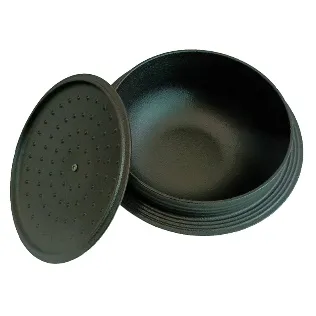
The WC-CI631 Yanbian-style pot comes with a matching lid in two sizes, 20 × 10 cm and 24 × 12 cm, and the catalogue lists gas and induction. It is a good fit for rice dishes, soups and stews. For street-food vendors and regional ranges, the WC-CI632 sweet potato roaster comes in three sizes from 22 to 27 cm.

Snack pans: takoyaki and tamagoyaki
Compare cavity count, opening dimensions, base shape and handling on the selected snack-pan sample. The catalog lists three versions:
- WC-CI636: 14 cavities, 21 cm pan with a 17 cm wooden handle, 1.3 kg.
- WC-CI637: 15 cavities in an oval body with two loop handles, 23 × 21 × 3.5 cm, 1.6 kg; gas and induction listed.
- WC-CI638: 16 cavities in a 4 × 4 square, 21 × 21 × 3.8 cm, 1.7 kg; gas and induction listed.
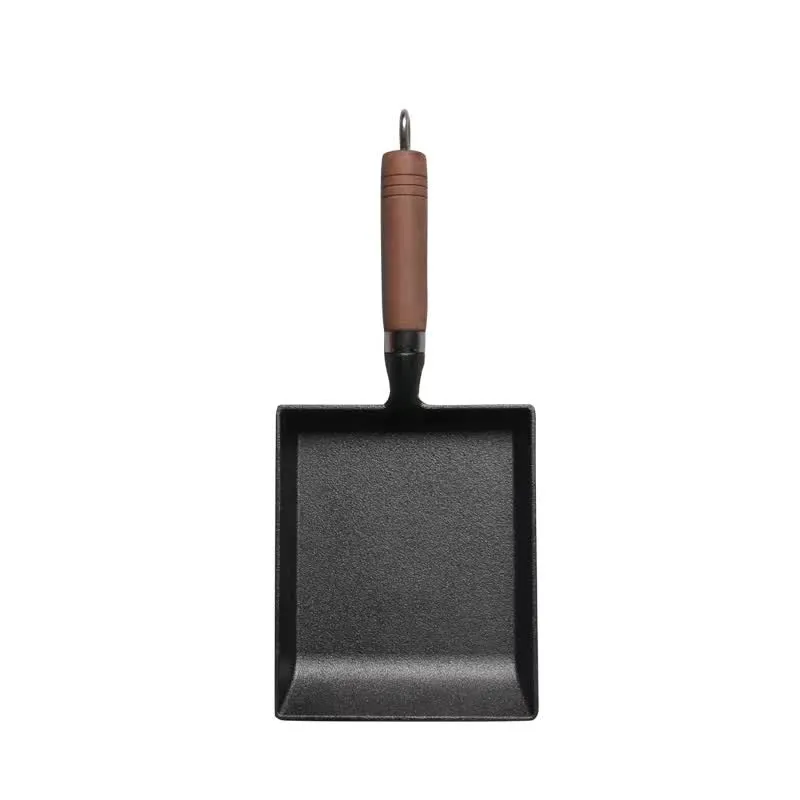
For rolled omelettes, the WC-CI504 tamagoyaki pan has a straight-sided rectangular cooking area and a 19 cm wooden handle with a hanging loop.

Care and packaging for humid markets
Confirm the finish and corresponding care leaflet for every selected SKU. Agree moisture protection, an inner pack and outer-carton requirements for the shipping route, with any packing test defined before ordering. Use the approved care instructions in the retail artwork.
Putting a range together
Build a proposed range from the retailer’s actual cooker types and product brief: for example, a compatible wok, a divided pot and a snack pan. Confirm the preferred sizes, handles and quantities with that buyer. Review branding and packing options; MOQ and mixed-order availability are confirmed by model and configuration.
Related guides
FAQ
Flat-bottom or round-bottom cast iron wok?
Choose the base against the buyer’s actual cooker requirements and the selected model’s approved instructions. Confirm its footprint, support and permitted heat sources on the sample before ordering.
Is a cast iron wok too heavy for home cooks?
It is heavier than carbon steel. Our 36 cm WC-CI522 is about 4.5 kg, and the WC-CI601 range runs from 1.5 kg at 20 cm to 4.9 kg at 38 cm. Smaller sizes, or woks with two side handles instead of one long handle, are easier to lift.
Do cast iron woks rust?
Uncoated cast iron will rust if it is left wet. Wash, dry it fully and wipe on a thin coat of oil after use. Include those care instructions on the packaging to cut complaints.
Do you supply hot pots and takoyaki pans in mixed orders?
Send the proposed models, quantities, finish and packing brief. Mixed-order availability and MOQ are confirmed for each selected reference in the quotation.
Which of these pans work on induction?
The catalogue lists gas and induction for the WC-CI637 and WC-CI638 takoyaki pans and the WC-CI631 pot. For other models, heat sources are confirmed with the quotation.